Best Prenatal Vitamins by Bone-Building Nutrient Set

Five prenatal vitamins compared on the nutrients that actually build bone during pregnancy: vitamin D, K2, magnesium and calcium partners. Winner named, trade-offs stated.

By Harley GriffithsUpdated 14 min read
On this page
- Who this guide is not for
- Best prenatal vitamins for bone health at a glance
- How I screened the shortlist
- What actually builds bone during pregnancy?
- 1. Nature Made Prenatal Vitamins with Folic Acid + DHA — Best overall
- 2. Needed. Prenatal Vitamin D3/K2 — Best for families
- 3. THORNE Basic Prenatal — Best premium
- 4. OLLY Prenatal Multivitamin Gummy — Best budget pick
- 5. One A Day Prenatal Advanced — Most versatile
- Softgel, capsule or gummy: does the format matter?
- How many days does one bottle last?
- What the labels do not tell you
- The verdict
- FAQ
The best prenatal vitamins for bone health here are Nature Made Prenatal Vitamins with Folic Acid + DHA, because the 110-softgel bottle names bone health directly and delivers magnesium plus all eight B vitamins in one daily dose. If your practitioner has flagged low vitamin D, add Needed. Prenatal Vitamin D3/K2 in a 60-capsule bottle alongside a standard prenatal, since D3 and K2 work together and most prenatals underdose the pair.
Who this guide is not for
A quick honest note before the picks. The keyword promises prenatals chosen for bone health, and only two products in this shortlist say anything specific about bone development on the label: Nature Made lists it as a supported outcome, and Needed. is built around the D3 and K2 pair that partners with calcium. The other three are general prenatals that happen to include some bone-relevant nutrients.
If your priority is a calcium-loaded prenatal, no product in this set is that. Most prenatals deliberately keep calcium modest because iron and calcium compete for absorption, and the assumption is you eat dairy or take calcium separately. Talk to your OB or midwife about a dedicated calcium supplement if bloodwork points that way. This guide compares what is here, honestly, and flags where a second bottle earns its shelf space.
Best prenatal vitamins for bone health at a glance
| Pick | Format | Days per bottle | Price |
|---|---|---|---|
Best overall Nature Made Prenatal + DHA |
Softgel | 110 | Check Price |
Best for families Needed. Prenatal Vitamin D3/K2 |
Capsule (add-on) | 60 | Check Price |
Best premium THORNE Basic Prenatal |
Capsule | 30 (3 daily) | Check Price |
Best budget pick OLLY Prenatal Multi Gummy |
Gummy | 30 (2 daily) | Check Price |
Most versatile One A Day Prenatal Advanced |
Softgel + tablet | 60 | Check Price |



How I screened the shortlist
Three reasons picks were cut before this list came together. First, any prenatal without a clear nutrient story around bone-relevant vitamins was set aside. Second, any bottle where the daily serving was ambiguous or the format did not match a real routine got dropped. Third, listings with unclear day counts made cost-per-day impossible to reason about, so those went too.
What survived splits into three groups:
- Bone-labelled daily prenatals, where the manufacturer names bone health as a supported outcome. Only Nature Made is explicit.
- Bone-focused add-ons, meant to sit beside a prenatal rather than replace it. Needed. is the one here.
- General prenatals whose formulation happens to include bone-relevant nutrients like vitamin D, but which pitch themselves on brain and neural development instead. THORNE, OLLY and One A Day are in this bucket.
Reading the picks in that order tells you what you are actually buying: a labelled bone-health prenatal, a targeted add-on, or a good general prenatal you are choosing for other reasons too.
What actually builds bone during pregnancy?
Bone is not built by calcium alone. Vitamin D moves calcium from the gut into the bloodstream, vitamin K2 helps direct it into bone rather than soft tissue, and magnesium is a structural mineral in its own right. That is why the best prenatal vitamins for bone health are judged on the set of nutrients rather than a single flashy number.
In this shortlist:
- Nature Made names magnesium and the full B-vitamin range and puts bone health on the label as a supported outcome.
- Needed. is built around D3 and K2 specifically, the pair the brand argues most prenatals underdose.
- THORNE emphasises well-absorbed nutrients and active folate, useful because absorption limits how much bone-building material actually reaches you.
- OLLY highlights vitamin D for immune support, so bone benefit is a side effect rather than the pitch.
- One A Day splits its formula across a softgel and a tablet, which lets it fit more nutrients in without one giant pill.
None of these is a calcium supplement. If your bloodwork or diet says you need one, that is a separate conversation with your clinician.
1. Nature Made Prenatal Vitamins with Folic Acid + DHA — Best overall
The only prenatal here that names bone health directly on the label, in a 110-softgel bottle sized for a full 110-day supply.
Best for: a daily prenatal that names bone health on the label Skip it if: you cannot swallow softgels
Nature Made is the clearest match for the best prenatal vitamins for bone health question in this set because the manufacturer says so plainly. The brand states the softgel supports baby's brain, bone, eye and nervous system development, and separately lists magnesium and all eight B vitamins including biotin among the nutrients aimed at maternal health. That is a bone-adjacent formulation stated on the label, not inferred.
Practical details matter too. The bottle is 110 softgels at one softgel daily, which works out to a 110-day supply from a single purchase. Nature Made is the second-cheapest of the six here and sits in the entry price position, so cost per day is genuinely low. The 5.13 x 2.63 x 2.63 in bottle fits a bathroom shelf without a rearrangement. It sells faster than most of this set, which usually means the format and instructions work for the people trying it.
The trade-off: it is a softgel with an orange scent, and if softgels are the reason you have failed at prenatals before, that is not going to change here.
Pros:
- Bone health named explicitly on the label
- 110-day supply from one bottle
- Includes magnesium and all eight B vitamins
- Gluten free with no synthetic FD&C dyes
- Entry price position in this set
Cons:
- Softgel format rules out anyone who gags on them
- Added orange scent is not for everyone
- No K2 called out in the feature list
2. Needed. Prenatal Vitamin D3/K2 — Best for families
A targeted D3 and K2 capsule to sit beside a prenatal, aimed at the exact nutrient pair most prenatals underdose.

Best for: adding the D3 and K2 pair most prenatals underdose Skip it if: you want one bottle that covers everything
Needed. is the odd one out on purpose. This is a 60-capsule bottle of vitamin D3 paired with K2, not a full multivitamin, and the brand is upfront that most prenatals do not include enough of either. That framing matters for bone health, because D3 is what puts calcium into circulation and K2 is what directs it into bone tissue. The manufacturer says the two work synergistically for nutrient absorption and calls out both healthy bone development in baby and avoiding bone-related pain in the mother as reasons the pair exists.
It sits in the middle of this set on price and is the slowest seller of the six, which fits: it is a niche product for shoppers whose bloodwork or clinician has flagged a specific gap. Capsules are described as small and easy to take, which is a real feature if you already gag down a big prenatal.
The honest trade-off is that this is not a prenatal on its own. Buying Needed. means buying two bottles, which raises total cost and adds a second thing to remember. If that friction is a dealbreaker, a general prenatal that mentions D and K is the more realistic pick.
Pros:
- Targets the D3 and K2 pair specifically
- Small capsules per the manufacturer
- Bone development named for baby and mother
- Sits at mid price position
Cons:
- Not a standalone prenatal
- Requires a second bottle in your routine
- Fewer published specifications than others in the set
- Slowest seller of the six here
3. THORNE Basic Prenatal — Best premium
A three-capsules-daily prenatal built around bioavailability, active folate and a gentler iron form.
Best for: a bioavailable capsule with active folate and gentle iron Skip it if: you would rather take one pill a day
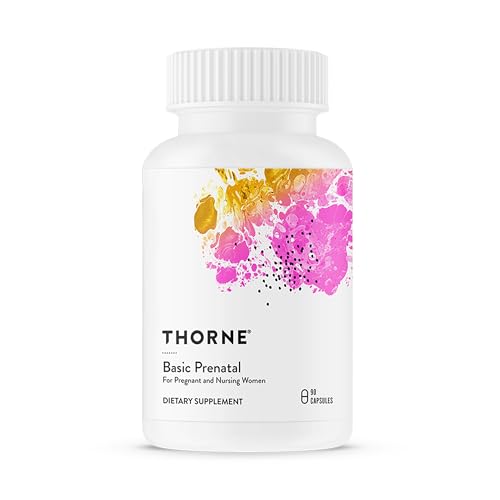
THORNE takes a different route. This is a 90-capsule bottle at three capsules daily, giving a 30-day supply, and the pitch is absorption rather than a headline nutrient. THORNE describes the formula as well-absorbed and highly bioavailable, includes L-5-methyltetrahydrofolate and folinic acid in a 1:1 ratio, and uses iron picolinate, which the brand says is easy on the stomach and non-constipating. That last point matters more than it sounds: prenatal iron is one of the most common reasons pregnant people quit their vitamin.
For bone health specifically, THORNE does not lead with the claim, but a well-absorbed multivitamin is the kind of general prenatal that gives bone-relevant nutrients a fair chance to actually land. It is the most expensive pick here and sits in the premium price position, so you are paying for the formulation choices, not the bottle count. The 4.66 oz bottle is compact at 4.47 x 2.5 x 2.5 in.
The trade-off is the daily commitment: three capsules is three swallowing events, and a 90-count bottle only lasts 30 days. Cost per day and pill count are the reasons this is a considered choice rather than a default.
Pros:
- Active folate in a balanced 1:1 ratio
- Iron picolinate described as gentle on the stomach
- Bioavailable nutrient forms across the formula
- Compact bottle footprint
Cons:
- Three capsules daily
- 30-day supply per bottle
- Highest price position in this set
- Bone health not named on the label
4. OLLY Prenatal Multivitamin Gummy — Best budget pick
A raspberry-and-citrus gummy for anyone who cannot face another softgel, at the cheapest position in this set.
Best for: anyone who gags on softgels and needs an easy chew Skip it if: you want iron in your prenatal
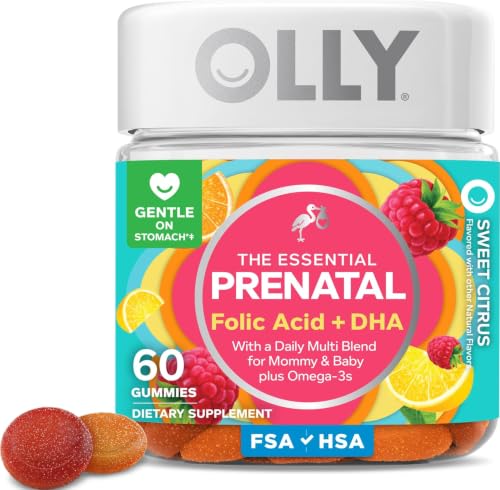
OLLY is the pick for the pregnancy where nothing stays down and softgels are the enemy. It is a 60-count bottle at two gummies daily, so a 30-day supply, taken by chewing thoroughly with no food or water needed. That last part is not a small thing in the first trimester. Flavours are described as raspberry and citrus. The manufacturer highlights folic acid for growth and development and vitamin D for immune support in the mother.
For bone health, that vitamin D is the relevant nutrient in the OLLY formula, and it earns the gummy a place in the conversation, though the brand does not build its pitch around bones. This is a general prenatal in a chewable format. It is the cheapest of the six, sits in the entry price position and sells faster than most of this set, which reflects the reality that a lot of pregnant people simply cannot get a softgel down.
The catch is iron. Prenatal gummies typically leave iron out because it tastes metallic and destroys the flavour, and iron is one of the nutrients most people are asked to increase during pregnancy. If your clinician wants iron in your prenatal, this is not the bottle.
Pros:
- Cheapest pick in this set
- No water needed
- Raspberry and citrus flavour blend
- Simple two-gummy daily routine
Cons:
- No iron in a gummy prenatal
- 30-day supply per bottle
- Bone health not the manufacturer's pitch
- Added sugars come with any gummy format
5. One A Day Prenatal Advanced — Most versatile
A softgel plus a tablet daily, splitting brain-building and general prenatal nutrients across two smaller pills.

Best for: splitting nutrients across a softgel and a tablet Skip it if: a two-piece routine feels like one thing too many
One A Day Prenatal Advanced is the compromise pick. The 60+60 count set gives a 60-day supply at one softgel and one tablet daily, and the format lets the brand fit four nutrients it calls brain-building essentials, choline, DHA, folic acid and iron, without stuffing them into a single horse pill. The manufacturer says the formula is free of seven major US food allergens including egg, dairy, wheat, peanut and tree nut, which is a real filter for some shoppers.
For bone health, the case is indirect. Vitamin D is standard in prenatals of this class, and the two-piece format leaves room for a wider nutrient spread than a single softgel can hold. This is one of the more expensive picks and sits in the premium price position. The 6.72 oz combined pack is the heaviest here at 4.72 x 3.25 x 2.47 in, because two bottles' worth of pills weigh more than one.
The trade-off is the two-piece routine itself. Some people find splitting a prenatal across a softgel and a tablet gentler on the stomach. Others find it doubles the chance of forgetting one half.
Pros:
- Two-piece format eases pill size
- 60-day supply per set
- Free of seven major US food allergens
- Choline, DHA, folic acid and iron together
Cons:
- Premium price position
- Two pieces daily to remember
- Heaviest pack in this set
- Bone health not named on the label
Softgel, capsule or gummy: does the format matter?
Format matters more during pregnancy than at any other point in your supplement life, because morning sickness rewrites the rules of what you can actually swallow. Softgels like Nature Made and half of One A Day are slippery and neutral, but the scent can flip the wrong way in the first trimester. Capsules like THORNE and Needed. are drier and often smaller, which some shoppers tolerate better. Gummies like OLLY skip the swallowing question entirely.
Two honest rules of thumb from the specifications alone:
- If you have been gagging on softgels for weeks, the gummy or the capsule is a better bet than a bigger softgel.
- If your clinician wants iron in the prenatal, the gummy drops out, because prenatal gummies typically omit iron.
Format is also where cost-per-day sneaks up. A 30-day bottle bought monthly ends up more expensive than a 110-day bottle bought quarterly, even at a lower sticker.
How many days does one bottle last?
Bottle counts do not translate directly to days, because the daily dose changes. Working from what the manufacturers state:
- Nature Made: 110 softgels, one daily, 110 days.
- Needed.: 60 capsules, dosing varies with need.
- THORNE: 90 capsules, three daily, 30 days.
- OLLY: 60 gummies, two daily, 30 days.
- One A Day: 60 softgels plus 60 tablets, one of each daily, 60 days.
Nature Made is the outlier on shelf life per bottle, which is one of the quieter reasons it earns the overall pick for the best prenatal vitamins for bone health here. Fewer reorders means fewer chances to run out mid-week and skip days. THORNE and OLLY are 30-day bottles, so a standing reorder makes sense. One A Day lands in the middle at 60 days.
What the labels do not tell you
Two things every prenatal label leaves quiet.
First, prenatals deliberately underdose calcium. Iron and calcium compete for absorption, and most formulations pick iron because iron deficiency is common in pregnancy. If bone health is your reason for shopping, that gap is usually filled by diet or a separate calcium supplement taken at a different time of day from the prenatal.
Second, published day counts assume you take the full daily dose, every day, from the day the bottle opens. Real life is messier. A 30-day bottle stretches to 40 days for most people because a few doses get skipped, and that is fine unless you are trying to correct a specific deficiency, in which case consistency matters more than the exact product.
Neither of these is on any label in this shortlist. Both change what "the best prenatal vitamins for bone health" actually means for you.
The verdict
Nature Made Prenatal Vitamins with Folic Acid + DHA is the winner for the best prenatal vitamins for bone health in this set, because it is the only pick that names bone health as a supported outcome, delivers magnesium and all eight B vitamins in a one-softgel daily dose, and lasts 110 days per bottle at the entry price position. For a general prenatal chosen with bone-relevant nutrients in mind, that is a defensible default.
Two conditions flip the choice. If your clinician has flagged low vitamin D specifically, Needed. Prenatal Vitamin D3/K2 is the more targeted answer, because it pairs D3 and K2 in a 60-capsule bottle built around that exact nutrient partnership, and it is designed to sit alongside a general prenatal rather than replace one. If you cannot get softgels down at all, OLLY Prenatal Multi Gummy is the realistic pick, at the cheapest position in this set with a raspberry and citrus flavour and no water needed, though you will need to source iron elsewhere.
THORNE earns its premium position for shoppers who care about active folate and gentle iron, and One A Day suits anyone who prefers two smaller pieces to one larger pill.
FAQ
Are any of these actually calcium supplements?
No, none of these are calcium supplements. Prenatals in this shortlist deliberately keep calcium modest because iron and calcium compete for absorption, and iron takes priority in pregnancy formulations. If your bloodwork or diet points to a calcium gap, plan on a separate calcium supplement taken at a different time of day from your prenatal, on advice from your OB or midwife.
Is a prenatal worth it if I already eat well?
A prenatal is worth it because pregnancy raises requirements for folate, iron and several other nutrients above what most diets reliably deliver every day. Folic acid in particular has a window in early pregnancy where consistent intake matters, and no eating pattern is that consistent. A daily prenatal is insurance for the days meals go sideways, which in pregnancy is more days than you would like.
How does Nature Made compare to THORNE on bone-relevant nutrients?
Nature Made compares favourably on bone-relevant labelling: it names bone health as a supported outcome and lists magnesium and all eight B vitamins for the mother. THORNE does not name bone health but pitches itself on absorption, with active folate in a 1:1 ratio and iron picolinate the brand describes as gentle on the stomach. Nature Made wins on stated bone focus; THORNE wins on absorption emphasis.
Do gummy prenatals work as well as softgels?
Gummy prenatals work as well as softgels for the nutrients they contain, but they usually contain fewer of them. OLLY is a good example: the brand highlights folic acid and vitamin D for the mother, and the format is easy to keep down in the first trimester, but gummy prenatals typically leave iron out because of taste. Softgels fit more nutrients per dose, which is often the reason to pick one.
What is the biggest pitfall when shopping prenatal vitamins?
The biggest pitfall when shopping prenatal vitamins is treating one label claim as the whole story. A prenatal that names brain development says nothing about whether it supports bone health, and a prenatal that names bone health may still underdose vitamin D. Read the nutrient list, match it to what your clinician has flagged in your bloodwork, and be willing to add a second bottle if one product cannot cover both.
Once you have picked a prenatal, the next step is a small one: set a daily anchor for it. Most people who quit their prenatal quit because they forgot it three days in a row, not because the product failed them. Pair the bottle with something you already do at the same time each day, whether that is breakfast, brushing your teeth or feeding a pet. Nature Made earns the default here because the 110-day bottle removes the mid-cycle reorder that trips people up most, and the label reads like a formulation that took bone-relevant nutrients seriously alongside the folic acid and DHA every prenatal has to nail.