Best Organic Picolinate Zinc for Daily Immune Support
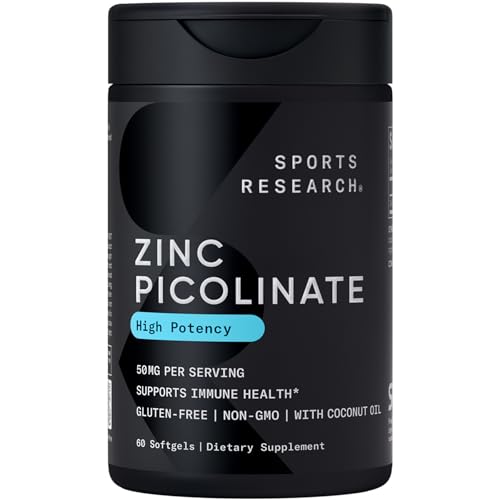
Five zinc picolinate supplements compared on dose, capsule count and what the label actually certifies. One softgel delivers 50mg; another capsule holds 15mg. That gap decides which bottle belongs in your cabinet.

By Harley GriffithsUpdated 14 min read
On this page
- Best organic picolinate zinc at a glance
- How I screened these five zinc bottles
- Does organic picolinate zinc actually mean organic?
- 15mg or 50mg: which dose belongs in your cabinet?
- 1. Sports Research Zinc Picolinate 50mg w/Organic Coconut — Best overall
- 2. THORNE Zinc Picolinate 15 mg — Best minimal setup
- 3. Pure Encapsulations Zinc 15 mg — Best budget pick
- 4. Nutricost Zinc Picolinate 50mg — Best for pros
- 5. Why Not Natural Organic Liquid Zinc Drops — Best premium
- What third-party certification tells you that a label cannot
- How long does one bottle actually last?
- The verdict
- FAQ
The best organic picolinate zinc is the Sports Research Zinc Picolinate 50mg, because one softgel carries the full 50mg in an organic coconut oil base with nothing to measure or split. If 50mg is more than you want daily, THORNE Zinc Picolinate 15 mg drops the dose to a third and is third-party certified. Get this wrong and the cost is not wasted money. It's months of taking a dose that's either too high for comfortable daily use or too low to matter, on a mineral where the gap between those two is real.
Best organic picolinate zinc at a glance
| Pick | Zinc per serving | Servings per bottle | Price |
|---|---|---|---|
| 50mg claim | 60 softgels | Check Price | |
Best minimal setup THORNE Zinc Picolinate 15 mg |
15mg claim | 60 capsules | Check Price |
Best budget pick Pure Encapsulations Zinc 15 mg |
15mg claim | 60 capsules | Check Price |
Best for pros Nutricost Zinc Picolinate 50mg |
50mg claim | 240 capsules | Check Price |
Best premium Why Not Natural Organic Liquid Zinc Drops |
Liquid, dose by dropper | 4 fl oz bottle | Check Price |



How I screened these five zinc bottles
I ranked these on three criteria, weighted in this order.
- Dose clarity, weighted heaviest. A zinc supplement that states its milligrams per serving on the listing lets you plan. Four of the five do. The liquid does not publish a milligram figure, and that costs it the top spot despite everything else it gets right.
- Form of zinc named. Picolinate is the point of the search. Three listings name zinc picolinate explicitly in the product title. One names both picolinate and bisglycinate. One does not name the form at all.
- Servings per bottle. This decides how often you reorder, and the spread here is wide: 60 at one end, 240 at the other.
Why those three and not others? Because everything else in this category is either identical across the set or unpublished. All five come in a single pack. All five sit in the same broad supplement aisle, four of them under a zinc mineral category path. None publishes a warranty, which is normal for a consumable. So the variables that actually separate them are milligrams, form and count.
What I did not weigh: the health claims. Every one of these listings makes them, and every one carries the asterisk that goes with them. Those claims are the manufacturer's, and I've attributed them below rather than treating them as findings.
Does organic picolinate zinc actually mean organic?
Here's the trick with best organic picolinate zinc as a search: the word organic is doing two very different jobs across these five listings, and only one of them is a certification.
Sports Research puts organic coconut oil in the softgel. That's an organic ingredient inside the capsule, not an organic certification on the zinc itself. Zinc is a mineral. Minerals are not grown, so a mineral cannot be organic in the USDA sense.
Why Not Natural is the only pick here that claims a certification. Its listing says the drops are USDA certified organic, and adds vegan, sugar-free, and free of GMOs and most common allergens including peanut, soy, gluten, dairy and wheat. That's the manufacturer's claim, and it's the strongest organic-specific claim in the set.
Pure Encapsulations uses "Organic Zinc Supplements" as a bullet heading. Read the sentence under it and it's about digestion, metabolism and enzyme activity, not certification.
So if a certified-organic label is genuinely your requirement, the liquid is the only pick that claims one. If you mean "clean formulation, no junk", four of the five make free-from claims of some kind. Most shoppers miss this distinction and end up buying on the word rather than the certificate.
15mg or 50mg: which dose belongs in your cabinet?
This is the real deciding criterion in best organic picolinate zinc, and it splits the field cleanly down the middle.
The 50mg group: Sports Research and Nutricost. The 15mg group: THORNE and Pure Encapsulations. The liquid sits outside both, because you set the dose with the dropper.
A dose over three times larger is not a detail. It changes how the bottle fits into a routine. Fifty milligrams in a single softgel is convenient if that's the amount you want. It is inconvenient if it isn't, because you cannot split a softgel and get half.
Fifteen milligrams gives you room. Take one, take two, adjust without cutting anything. That flexibility is why THORNE and Pure Encapsulations suit long-run daily use better than the higher-dose bottles do, even though they look weaker on the label.
- Want one pill, one dose, done: the 50mg softgel.
- Want to start low and adjust: a 15mg capsule.
- Cannot swallow pills at all: the liquid drops.
- Want the largest bottle you can get: the 240-count.
If you're taking zinc alongside other supplements or on a doctor's instruction, the lower-dose capsules are the easier building block. Talk to whoever gave you the instruction before you pick a milligram figure off a label.
1. Sports Research Zinc Picolinate 50mg w/Organic Coconut — Best overall
One softgel a day, 50mg of zinc picolinate, and an organic coconut oil base you won't find anywhere else in this set.
Best for: one-a-day dosing with a liquid softgel Skip it if: you want a lower daily dose
What separates this pick inside the set is the delivery form. It's the only softgel here. The other capsule picks are dry powder in a shell; this one suspends the zinc in organic coconut oil, and Sports Research describes it as a fast-acting liquid softgel for that reason. That's their claim, not a measured result, but the format difference is real and visible on the label.
The bottle holds 60 softgels in a 4 x 2.13 x 2.13 in container, so it fits a medicine cabinet shelf without argument. Dose is 50mg from one softgel a day. Sports Research also cites a human clinical trial in which zinc picolinate absorbed better than zinc citrate and gluconate, and says the product is made in cGMP compliant facilities in the United States.
It sells faster than every pick here except the two 15mg capsules, which tells you the one-a-day format has an audience. It's mid-range for price position in this group, which is the trade-off: you pay more than either 15mg capsule for a dose you cannot reduce, and you get a third of the capsule count that Nutricost gives you.
Pros:
- Only softgel in the set, in organic coconut oil
- Full 50mg from a single daily softgel
- Compact 4 x 2.13 x 2.13 in bottle
- Made in cGMP compliant US facilities, per the listing
- Third-fastest seller among these five
Cons:
- 50mg cannot be halved in a softgel
- Only 60 servings, versus 240 from Nutricost
- Organic refers to the coconut oil, not a zinc certification
- No published third-party contents certification
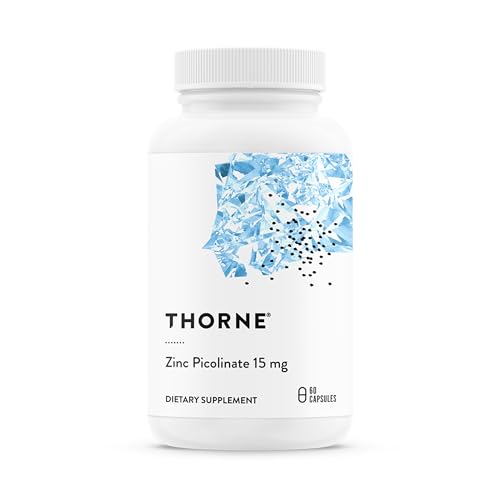
2. THORNE Zinc Picolinate 15 mg — Best minimal setup
Fifteen milligrams per capsule and third-party contents certification, which no other pick here publishes.
Best for: long-term daily use at a modest dose Skip it if: you need a high single dose
THORNE is the fastest-selling pick in this group and the one buyers choose most often here, and the certification claim is the likely reason. The listing states the product has been third-party tested and certified to verify that what's in the package matches what's on the label. Among these five, that specific claim appears once.
Dose is 15mg of zinc picolinate per capsule, 60 capsules per bottle, model M210. The bottle measures 3.22 x 1.83 x 1.83 in, making it the slimmest capsule bottle of the four. THORNE frames the mineral around general wellness, reproductive health, skin, connective tissue and eyes, and adds claims about oxidative stress, inflammatory balance and normal testosterone production. Those are the manufacturer's statements.
It sits at the entry end for price position, which makes the certification claim look like good value. The catch is arithmetic. At 15mg a capsule, a 60-count bottle gives you two months at one a day, and if you want anything near 50mg you're taking three capsules and emptying the bottle in twenty days. That's the trade it makes against the two 50mg picks.
Pros:
- Third-party contents certified, per the listing
- Fastest seller of the five here
- Entry-level price position in this set
- Slimmest capsule bottle at 3.22 x 1.83 x 1.83 in
- Named model number, M210, for reordering
Cons:
- 15mg means multiple capsules for a higher intake
- Only 60 capsules per bottle
- No organic certification claimed on the listing
- Coconut-oil or liquid formats not available here
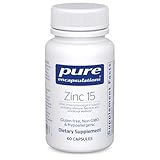
3. Pure Encapsulations Zinc 15 mg — Best budget pick
The cheapest of the five, with a free-from formulation claim and the same 15mg dose as THORNE.
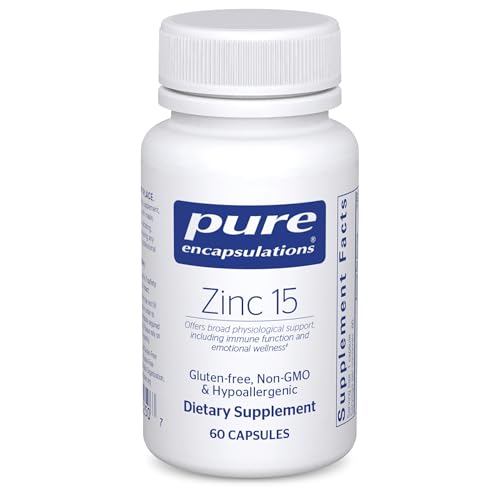
Best for: the lowest cost of entry to a 15mg capsule Skip it if: you specifically want picolinate named on the front
This is the cheapest pick here, and the only one whose listing does not name the zinc form in the product title. That's the single most important thing to know about it. If picolinate specifically is what you're after, that omission matters, and one of the other four names it plainly.
What you get instead is a 15mg dose across 60 capsules in a 1.5 x 3.31 x 1.5 in bottle, model 766298002507. It's the heaviest bottle in the set at 22.7 g. Pure Encapsulations leans on what it leaves out, saying the products are free from common allergens, artificial or unnecessary ingredients, and GMOs. The listing's claims cover immune and brain health, cognitive function, digestion, metabolism, enzyme activity, protein synthesis, tissue growth, stress response and reproductive function.
Note that "Organic Zinc Supplements" appears as a bullet heading, not as a certification. The sentence beneath it is about digestion and enzyme activity. It sells more briskly than three of the five, and its price position is the lowest here. The cost of that is the least specific labelling in the group.
Pros:
- Cheapest of the five picks here
- Free-from claim covering allergens, artificials and GMOs
- 15mg dose leaves room to adjust upward
- Second-fastest seller in this comparison
Cons:
- Zinc form not named in the product title
- "Organic" used as a bullet heading, not a certification
- Only 60 capsules per bottle
- No third-party certification claim published
4. Nutricost Zinc Picolinate 50mg — Best for pros
Two hundred and forty capsules at 50mg each, which is four times the count of every other bottle here.

Best for: buying once and forgetting about it for months Skip it if: you are trying zinc for the first time
Count is the whole argument. Nutricost publishes 240 vegetarian capsules per bottle, at 50mg of zinc from zinc picolinate per serving, which works out to 240 servings. Every other pick in this comparison holds 60 servings or an unstated number of dropper doses. At one capsule a day, that's roughly eight months from a single bottle.
The listing also states GMO-free and gluten-free, and says the product is manufactured in an NSF certified, GMP compliant, FDA registered facility. Vegetarian capsules matter here too, since the softgel pick is not vegetarian by format.
The bottle's dimensions are not published, which is worth knowing if shelf space is tight. A 240-count container is not small. Its price position is at the premium end of this group, and that's the honest catch: the total outlay is higher than any capsule pick here, and you are committing to a 50mg dose 240 times over before you know whether it suits you. Buy this second, after a smaller bottle has answered that question.
Pros:
- 240 capsules, four times any other pick here
- 50mg of zinc picolinate per single capsule
- Vegetarian capsules, unlike the softgel pick
- NSF certified, GMP compliant facility per the listing
- GMO-free and gluten-free claims published
Cons:
- Premium price position for total outlay
- No published bottle dimensions
- 50mg dose locked in across 240 capsules
- No organic certification claim on the listing
5. Why Not Natural Organic Liquid Zinc Drops — Best premium
The only liquid and the only USDA certified organic claim in this comparison, in a 4 fl oz dropper bottle.

Best for: anyone who cannot swallow capsules Skip it if: you want a fixed dose with no measuring
Two things make this pick unique in the set. It's the only format that requires no swallowing of a pill, and it's the only listing claiming USDA certified organic status. Add vegan, sugar-free, and free of artificial colours, GMOs and most allergens including peanut, soy, gluten, dairy and wheat, and it carries the longest free-from list here.
It's also the only pick using two chelated forms. The listing names both zinc picolinate and zinc bisglycinate, and argues that chelates are gentler on the gastrointestinal system than zinc salts like sulfate or ionic zinc because they need less stomach acid. Released in 2024, it's the newest arrival in this group. Bottle size is 4 fl oz.
Now the problems. No milligram figure per serving is published on the listing, so you cannot compare its strength against the four capsule picks without reading the label in hand. Dosing means measuring drops, every day. It sits at the most expensive price position here, and it's the slowest seller of the five by a wide margin.
Pros:
- Only USDA certified organic claim in the set
- No pills to swallow, dropper format
- Two chelated forms: picolinate and bisglycinate
- Longest free-from list among these picks
- Newest release here, 2024
Cons:
- No milligram per serving figure published
- Most expensive pick in this comparison
- Requires measuring drops each dose
- Slowest seller of the five
- Liquid bottles are less travel-friendly than capsules
What third-party certification tells you that a label cannot
A supplement label is a claim. Certification is a claim somebody else checked. Across these five listings, three different kinds of assurance appear, and they are not equivalent.
Contents certification. THORNE states its product is third-party tested and certified to verify that the contents match the label. That's the narrowest and most useful kind: it addresses whether the 15mg on the front is the 15mg inside.
Facility certification. Nutricost cites an NSF certified, GMP compliant, FDA registered facility. Sports Research cites cGMP compliant facilities in the United States. These speak to how the product was made, not to what ended up in the capsule.
Ingredient certification. Why Not Natural claims USDA certified organic. That covers ingredient sourcing.
- Want to know the dose is real? Look for contents testing.
- Want to know the plant is clean? Look for GMP or NSF language.
- Want organic sourcing? Look for USDA wording specifically.
Two of the five publish no certification language at all. That isn't disqualifying, but it's the sort of gap worth noticing before you commit to a 240-capsule bottle.
How long does one bottle actually last?
Simple arithmetic, and it reshuffles the whole set.
At one unit a day, the three 60-count bottles last two months each. Nutricost's 240 capsules last roughly eight. The liquid depends entirely on your dropper volume, which is unpublished, so I can't put a number on it.
Now change the assumption. If you're taking 45mg via THORNE's 15mg capsules, that's three a day and the bottle empties in twenty days. If you're taking 50mg via one Sports Research softgel, the same 60-count bottle stretches to two months. Same count, wildly different lifespan, purely because of dose per unit.
That's the calculation most shoppers skip. Count on the front of the bottle means nothing until you multiply it by your daily units. I'd start by deciding your daily milligrams, then divide.
The verdict
Three price tiers, three sensible answers.
At the entry end sit THORNE and Pure Encapsulations, both 15mg, both 60 capsules. Pure Encapsulations is the cheapest here and the easiest first purchase. THORNE costs a little more and adds the third-party contents certification, which is the single most useful assurance in this group. Pay the small step up.
In the middle, Sports Research takes the overall win. One softgel gives you 50mg with organic coconut oil, no measuring, no counting to three, and a compact 4 x 2.13 x 2.13 in bottle. It's the most convenient way to take a full dose in this set, and that convenience is what wins it.
At the premium end you're choosing between volume and format. Nutricost gives you 240 capsules of 50mg zinc picolinate, vegetarian, from an NSF certified facility, which is the right buy once you know 50mg suits you. Why Not Natural gives you the only USDA certified organic claim and the only pill-free format, at the cost of an unpublished milligram figure.
The cutoff is your daily dose. Under 30mg, buy a 15mg capsule. At 50mg, buy a softgel or the 240-count.
FAQ
Is the best organic picolinate zinc worth paying extra for?
Worth paying extra for? Only when the extra buys something you'll use. THORNE's step up over Pure Encapsulations buys third-party contents certification, which is a real assurance. Nutricost's higher total outlay buys 240 capsules instead of 60, which is real value if 50mg suits you. Paying premium for a liquid you find fiddly buys nothing.
Which zinc picolinate supplement gives the most capsules per bottle?
The most capsules per bottle here is Nutricost, with 240 vegetarian capsules at 50mg of zinc from zinc picolinate each. Every other capsule pick in this comparison holds 60. That's a fourfold difference, and at one capsule daily it stretches to roughly eight months. The liquid pick does not publish a serving count at all.
THORNE or Sports Research: which should I buy?
THORNE or Sports Research comes down to dose. THORNE delivers 15mg per capsule with third-party contents certification and an entry-level price position, so it suits gradual daily use. Sports Research delivers the full 50mg in one organic-coconut-oil softgel, no counting required, at a mid-range position. Choose THORNE for flexibility, Sports Research for one-pill simplicity.
Do any of these picks avoid gelatin capsules?
Avoiding gelatin capsules narrows it to two. Nutricost states 240 vegetarian capsules on its listing, and Why Not Natural states its liquid drops are vegan. Sports Research uses a softgel, which is not described as vegetarian. THORNE and Pure Encapsulations do not publish capsule-shell material in their listing details, so check the label before buying.
What is the biggest mistake buyers make with zinc supplements?
The biggest mistake buyers make is reading the capsule count and ignoring the milligrams per capsule. A 60-count bottle at 15mg lasts two months at one a day and twenty days at three a day. Decide your daily dose first, then divide the count by your daily units. That number, not the front label, is what you're buying.
Start with the dose, not the bottle. Once you know whether you want 15mg or 50mg a day, four of these five picks answer themselves, and the fifth is there for anyone who can't manage capsules. Sports Research earns the default because it removes the only step people actually skip: it needs no counting, no splitting and no dropper, and a routine you don't have to think about is a routine you keep. Buy a 60-count bottle first, confirm it suits you, then size up to the 240-count if it does.