Best Magnesium Glycinate for a Daily Routine

A spec-by-spec comparison of six magnesium glycinate capsule and softgel products, ranked by what the labels actually publish: elemental dose, capsules per bottle, and third-party testing.

By Harley GriffithsUpdated 18 min read
On this page
- Best glycinate magnesium for energy at a glance
- How I sorted six magnesium glycinate labels into a ranking
- Does magnesium glycinate actually do anything for energy?
- Elemental magnesium is the number that matters
- 1. Pure Encapsulations Magnesium — Best overall
- 2. Bluebonnet Magnesium Glycinate — Runner-up
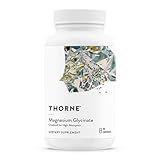
- 3. THORNE Magnesium Glycinate — Best for beginners
- 4. Nature's Bounty High Absorption Magnesium Glycinate 240 mg — Best for pros
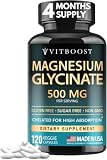
- 5. VITBOOST Magnesium Glycinate 500mg — Best budget pick
- 6. Totaria 9-in-1 Magnesium Glycinate 500mg + Vitamin D3 5000 — Best large-capacity
- How long does one bottle last?
- What more money buys in this category
- Pure Encapsulations vs Thorne: which capsule wins?
- The verdict
- FAQ
The best glycinate magnesium for energy is Pure Encapsulations Magnesium, a 90-capsule bottle whose whole pitch is what it leaves out: no common allergens, no GMOs, no filler ingredients the brand can't justify. If you want the highest published elemental dose instead, Bluebonnet Magnesium Glycinate states 400 mg per serving across 15 servings in a 60-capsule bottle, and it's the second-cheapest pick here.
Price tiers in this category buy specific things, not vague quality. The cheapest options give you 120 capsules and a modest per-capsule dose. The middle buys either a stated daily milligram total or a stacked formula with vitamin D3 and K2. The most expensive buy shorter ingredient lists and third-party certification language on the label. Nothing in this set buys you a bigger effect.
Best glycinate magnesium for energy at a glance
| Pick | Elemental dose | Capsules | Price |
|---|---|---|---|
Best overall Pure Encapsulations Magnesium |
Not stated on listing | 90 capsules | Check Price |
Runner-up Bluebonnet Magnesium Glycinate |
400 mg per serving claim 15 servings |
60 capsules | Check Price |
Best for beginners THORNE Magnesium Glycinate |
Not stated on listing | 90 capsules | Check Price |
Best for pros Nature's Bounty High Absorption Magnesium Glycinate |
240 mg from 2 capsules | 120 capsules | Check Price |
Best budget pick VITBOOST Magnesium Glycinate 500mg |
90 mg per capsule claim 21% DV |
120 capsules | Check Price |
Best large-capacity Totaria 9-in-1 Magnesium Glycinate 500mg + Vitamin D3 5000 |
500 mg glycinate claim + D3, K2 |
120 softgels | Check Price |




How I sorted six magnesium glycinate labels into a ranking
I started from buyer profiles rather than from a scoring sheet, because magnesium capsules don't separate on performance figures the way headphones or blenders do. Six products, six different people.
The profiles I mapped these to:
- The label reader. Wants the fewest ingredients possible and a brand that says so plainly. That's Pure Encapsulations.
- The dose maximiser. Wants the biggest published elemental number and will take multiple capsules to get it. That's Bluebonnet, at a stated 400 mg per serving.
- The nervous first-timer. Wants somebody outside the company to have checked the bottle. Thorne's listing states third-party testing and certification.
- The routine builder. Wants a simple two-capsule habit with a stated daily total. Nature's Bounty publishes 240 mg from two capsules.
- The cost-per-capsule shopper. Wants 120 capsules for the least outlay. VITBOOST is the cheapest of the six.
- The stacker. Already buying vitamin D3 separately and would rather not. Totaria puts D3 5000 IU and a K2 complex in the same softgel.
What I cut from consideration was any product whose listing gave me nothing quantitative to compare. Two of the six here publish no elemental milligram figure at all, which is why they're judged on formulation transparency and certification instead. And I dropped my own instinct to rank by how popular each one is. Sales position tells you what buyers picked, not what suits you.
Does magnesium glycinate actually do anything for energy?
Here's the honest answer: the word "energy" in the phrase best glycinate magnesium for energy is doing more work in search boxes than on these labels. Amazon's results for that phrase return general magnesium glycinate products, not a special energy subcategory. So treat the energy angle as a claim to evaluate, not a promise any of these six delivers.
Two listings do address it directly, and both are the manufacturer's wording. Bluebonnet's listing says magnesium is known to aid in the production of energy, and that without proper levels, nutrients from food and supplements may not be metabolised into energy. Pure Encapsulations says magnesium supports the metabolism of carbohydrates and amino acids, and supports energy production. Totaria's listing groups energy in with relaxation and sleep as things its formula "supports". Those are structure-function statements a supplement label is permitted to make. They are not measured outcomes.
What you can judge for yourself:
- Whether your intake is low in the first place, which is the only situation where topping up changes anything
- Whether the elemental dose is published, so you know what you're actually taking
- Whether you're stacking magnesium with something else that affects how you feel, which makes attribution impossible
Interestingly, four of these six listings lead with sleep and relaxation rather than energy. Thorne's copy talks about glycine as a calming neurotransmitter. VITBOOST's product title says "Support Sleep". That mismatch between what shoppers search and what brands emphasise is worth noticing before you buy.
Elemental magnesium is the number that matters
Most magnesium glycinate guides compare bottle counts and brand names. That's not what decides it. Elemental magnesium per capsule is the figure that determines what you're getting, and the big number on the front of the bottle usually isn't it.
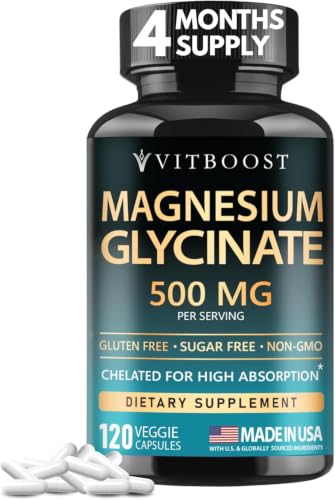
Look at VITBOOST. The title says 500mg. The listing then clarifies: 500 mg of magnesium glycinate chelate delivering 90 mg of elemental magnesium per capsule, which it puts at 21% of the daily value. The 500 mg is the weight of the whole chelated compound. The 90 mg is the mineral. Totaria's listing uses the same 500 mg framing per softgel and doesn't publish an elemental figure at all.
Now compare the two picks that give you a usable number:
- Bluebonnet: 400 mg elemental magnesium per serving, 15 servings from 60 capsules. That's four capsules per serving.
- Nature's Bounty: 240 mg of magnesium from two capsules per day, across 120 capsules.
Those are different products for different appetites. One asks for four capsules and gives a larger figure. The other asks for two and gives a smaller one. Neither is wrong. But you can only make that comparison because both brands published the number, and Pure Encapsulations and Thorne did not on these listings.
The practical move: check the supplement facts panel on the live listing before you commit. The compound weight and the elemental weight are usually both there, one much larger than the other.
1. Pure Encapsulations Magnesium — Best overall
The cleanest formulation story in this set, and the one buyers here choose more often than any other pick.
Best for: someone who wants the shortest ingredient list and a clean capsule Skip it if: you want a big bottle at the lowest price per capsule
Pure Encapsulations wins on subtraction. The listing's fifth bullet is the whole argument: free from common allergens, artificial or unnecessary ingredients, and GMOs. Several picks here mention non-GMO sourcing, but this is the one that builds its identity around exclusions rather than additions.
The bottle holds 90 capsules and weighs 4.8 oz, the only weight figure published across all six. Its footprint is 2.25 x 3.8 x 2.25 in, which makes it the shortest bottle here by height and the easiest to fit on a crowded shelf. The model number is 12450873.
On function, the brand's own copy covers a lot of ground: neuromuscular contraction and cardiac function, metabolism of carbohydrates and amino acids, energy production, and utilisation of calcium, phosphorus, sodium and potassium. It also says the glycinate form may support the sleep cycle by increasing total dietary magnesium intake. Standard structure-function language, and worth reading as claims rather than results.
The trade-off is money and maths. It's the most expensive pick here, it gives you 90 capsules where two picks give 120, and its listing doesn't publish an elemental magnesium figure. Bluebonnet publishes 400 mg per serving and costs less.
Pros:
- Explicit exclusion list covering allergens, GMOs and artificial ingredients
- Smallest bottle footprint at 2.25 x 3.8 x 2.25 in
- Only pick with a published weight, 4.8 oz
- Sells faster than any other pick in this set
- Model number stated for label verification
Cons:
- Most expensive of the six
- No elemental magnesium figure on the listing
- 90 capsules where two rivals give 120
- Only two sellers list it
2. Bluebonnet Magnesium Glycinate — Runner-up
The only pick that names a 400 mg elemental figure and puts energy production in the product title.

Best for: anyone chasing the highest published elemental dose per serving Skip it if: you dislike taking four capsules at once
Bluebonnet is the pick that answers the elemental question head-on. The listing states 400 mg per serving of elemental magnesium from fully reacted magnesium glycinate, described as a rapidly absorbed amino acid mineral complex. That's the highest published elemental figure in this comparison, and it's why this sits at number two despite being the second-cheapest here.
The maths matters. Sixty vegetable capsules, 15 servings, which works out to four capsules per serving. If swallowing four capsules in one go is a problem, this is the wrong bottle for you and Nature's Bounty at two capsules is the better fit.
Certification is unusually specific on this label: non-GMO certified by NSF, vegan, kosher certified, gluten-free, soy-free and dairy-free. The listing also names the allergens it excludes, milk, egg, barley, fish, sugar, sodium, crustacean shellfish, tree nuts, peanuts and wheat. Bluebonnet's own copy says magnesium is known to aid in energy production, and that without proper levels, nutrients may not be metabolised into energy. Bottle dimensions are 2.2 x 4.05 x 2.2 in, model 743715007482.
The honest weakness: 60 capsules at four per serving means this bottle empties fastest of the six.
Pros:
- Highest published elemental dose here, 400 mg per serving
- Non-GMO certified by NSF, plus kosher and vegan certification
- Second-cheapest pick in this set
- Named allergen exclusions listed on the label
Cons:
- Four capsules per serving, more than any other pick
- Only 15 servings from a 60-capsule bottle
- Sells more slowly than most of this set
- No published weight figure
3. THORNE Magnesium Glycinate — Best for beginners
Third-party tested and certified, which is the reassurance a first-time magnesium buyer is usually shopping for.

Best for: a first-time buyer who wants third-party certification stated on the label Skip it if: you need a published milligram figure before you buy
Thorne is the pick to hand someone who has never bought a mineral supplement and doesn't know who to trust. Its fourth bullet is the reason: the product has been third-party tested and certified to verify that what's in the package matches the label, and to confirm it contains no unsafe levels of contaminants. Bluebonnet names NSF for its non-GMO status; VITBOOST says third-party tested. Thorne is the one that spells out both purposes of the testing.
The listing describes magnesium as involved in more than 600 of the body's enzymatic reactions, supporting brain, muscles, bones and lungs. On sleep, it points to glycine as a calming neurotransmitter and says the combination promotes muscle relaxation before bedtime. On stress, it claims support for a calm response to everyday stress alongside focus and mental clarity. That's a formula pitched at winding down more than revving up, which is worth knowing if energy is your reason for buying.
Ninety capsules in a bottle measuring 4.2 x 2.49 x 2.49 in, which is taller and wider than the Pure Encapsulations bottle.
The gap is data. Thorne publishes no elemental magnesium figure and no serving size on this listing, and it's the second-most expensive pick here. You're buying the certification and the brand's reputation, not a number you can compare.
Pros:
- Third-party tested and certified for label accuracy and contaminants
- Detailed claims covering sleep, stress and mental clarity
- Second-fastest seller in this comparison
- Chelated magnesium form stated in the title
Cons:
- No elemental magnesium figure published
- No serving size stated on the listing
- Second-most expensive of the six
- Copy leans toward relaxation rather than energy
4. Nature's Bounty High Absorption Magnesium Glycinate 240 mg — Best for pros
A stated 240 mg from two capsules a day, which is the clearest daily routine in this set.

Best for: a two-capsule habit with a stated 240 mg daily total Skip it if: you want to hit a higher dose without doubling the serving
This is the pick for someone who already knows what they're doing and just wants an unambiguous daily number. The listing puts it plainly: two capsules per day provide 240 mg of magnesium. No decoding the difference between compound weight and elemental weight, and no arithmetic. Two capsules, 240 mg, done.
The 120-capsule bottle gives you 60 days at that serving size, the longest run of any pick here on its own stated schedule. Compare that to Bluebonnet's 15 servings and the difference in how often you reorder is substantial. Dimensions are 4.6 x 2.55 x 2.55 in, the tallest bottle in this comparison.
On formulation, the listing says magnesium glycinate is a form the body can absorb and use effectively, and claims support for heart, bone, nerve and muscle health. It's suitable for vegetarians, non-GMO, gluten-free and lactose-free, with no sugar, sodium, artificial colours or sweeteners. The brand points to 50 years of work behind the range.
Where it loses: 240 mg is a smaller published figure than Bluebonnet's 400 mg, and the listing carries no third-party testing statement of the kind Thorne and VITBOOST both make. It also sits mid-range on price rather than at the bottom, so you pay more per capsule than VITBOOST does.
Pros:
- Clearest daily dose statement here, 240 mg from two capsules
- 120 capsules, roughly 60 days at the stated serving
- Vegetarian, non-GMO, gluten-free and lactose-free
- Free of sugar, sodium and artificial sweeteners
Cons:
- Lower published elemental figure than Bluebonnet's 400 mg
- No third-party testing statement on the listing
- Tallest bottle of the six at 4.6 in
- Mid-range price for a mid-range dose
5. VITBOOST Magnesium Glycinate 500mg — Best budget pick
Cheapest of the six and the only one that publishes elemental magnesium per single capsule.
Best for: the lowest cost per capsule across 120 capsules Skip it if: you want more than 90 mg of elemental magnesium per capsule
VITBOOST does something none of the pricier picks bother with. It tells you exactly what a single capsule delivers: 500 mg of magnesium glycinate chelate yielding 90 mg of elemental magnesium, which the listing calls 21% of the daily value. One capsule daily with a meal and water is the stated instruction. That transparency, at the lowest price here, is a genuinely strong combination.
The ingredient list is three items long: magnesium glycinate chelate, vegetable capsule and organic brown rice flour. No artificial fillers or preservatives. The listing says vegan, non-GMO, third-party tested for purity and potency, and made in a cGMP facility in the USA. It also claims the smooth veggie capsules are easy to swallow and gentle on the stomach, and notes magnesium's role in more than 300 enzymatic processes.
You get 120 capsules in a bottle measuring 4.3 x 2.3 x 2.3 in, model VB-MG. At one capsule a day that's a four-month supply, the longest run in this set.
The catch is dose ceiling. At 90 mg per capsule you'd need more than four capsules to match Bluebonnet's stated 400 mg serving. This is also the slowest-selling pick of the six, and its own title emphasises sleep support rather than energy.
Pros:
- Cheapest of the six
- Only pick publishing elemental magnesium per single capsule, 90 mg
- Three-ingredient formula with no artificial fillers
- 120 capsules at one per day, roughly four months
- Third-party tested and cGMP facility stated
Cons:
- Lowest per-capsule elemental dose at 90 mg
- Would take four-plus capsules to match Bluebonnet's serving
- Slowest seller in this comparison
- Title leads on sleep, not energy
6. Totaria 9-in-1 Magnesium Glycinate 500mg + Vitamin D3 5000 — Best large-capacity
The only softgel here, and the only pick that folds vitamin D3 and K2 into the same capsule.

Best for: someone who also wants vitamin D3 and K2 in the same softgel Skip it if: you already take a separate D3 supplement
Totaria is the outlier in this set, and that's its argument. Every other pick is a capsule containing magnesium and not much else. This one is a softgel delivering 500 mg magnesium glycinate, 5000 IU vitamin D3 and an active K2 complex, 120 softgels to a bottle. If you were about to buy magnesium and D3 separately, one bottle instead of two is a real convenience.
The listing claims the chelated magnesium glycinate bypasses harsh stomach acid for direct intestinal absorption, and that this eliminates digestive discomfort common to other forms. It also says the formula supports relaxation, reduces daily stress and promotes restful sleep without the laxative effect associated with some magnesium types, and separately groups energy under overall wellbeing. Non-GMO ingredients, tested gluten-free, no artificial colours, flavours or preservatives.
Two things pull it to last place. First, the specification sheet is the thinnest here: no dimensions, no weight, and no elemental magnesium figure. Second, the D3 and K2 only help if you need them. Add 5000 IU of vitamin D you're already getting elsewhere and you've complicated your stack rather than simplified it. It's also the slowest-moving pick in this comparison by a wide margin, and it sits mid-range on price.
Pros:
- Combines magnesium glycinate, D3 5000 IU and K2 in one softgel
- 120 softgels, the largest count tied with two others
- Non-GMO and gluten-free tested
- Claims no laxative effect, unlike some magnesium forms
Cons:
- Thinnest specification data in the set, no weight or dimensions
- No elemental magnesium figure published
- D3 and K2 are wasted if you already supplement them
- Slowest seller of all six picks
How long does one bottle last?
This is where the picks separate most sharply, because count alone tells you almost nothing. Serving size is the multiplier.
Working from each listing's own stated serving:
- VITBOOST: one capsule daily, 120 capsules, roughly four months
- Nature's Bounty: two capsules daily, 120 capsules, roughly two months
- Bluebonnet: 15 servings stated, four capsules each, roughly two weeks at one serving a day
- Totaria: 120 softgels, serving size not published
- Pure Encapsulations: 90 capsules, serving size not published
- Thorne: 90 capsules, serving size not published
The spread between VITBOOST and Bluebonnet is the striking one. Same category, same form of magnesium, and one bottle lasts around eight times as long as the other. That's not a quality difference. It's a dose difference, and Bluebonnet is delivering considerably more elemental magnesium per serving to get there.
Skip the temptation to judge by bottle size. Half the picks here don't publish a serving size, so you'll need to read the supplement facts panel on the listing to work out your own reorder interval.
What more money buys in this category
Across these six, price tracks transparency and certification more than it tracks dose. That's the pattern worth understanding before you spend.
At the entry positions, VITBOOST and Bluebonnet, you get published numbers. VITBOOST states 90 mg elemental per capsule. Bluebonnet states 400 mg per serving. Both are cheaper than every other pick here, and both are more forthcoming about dose than either premium option.
In the middle, Nature's Bounty and Totaria, you're paying for convenience. Nature's Bounty gives you a clean two-capsule routine with a stated 240 mg total. Totaria bundles D3 and K2 so you buy one bottle instead of two.
At the top, Pure Encapsulations and Thorne, you're buying assurance about what isn't in the bottle. Pure Encapsulations publishes an explicit exclusion list. Thorne states third-party testing and certification against contaminants. Neither publishes an elemental figure on its listing.
So the honest summary: more money here buys formulation confidence, not a bigger dose. If your priority is a specific milligram target, the cheaper end of this set serves you better. If your priority is knowing exactly what else you're swallowing, the premium end is where that information lives.
Pure Encapsulations vs Thorne: which capsule wins?
These two are the closest pair in this comparison. Both are 90-capsule bottles, both sit in the premium tier, both sell quickly, and neither publishes an elemental magnesium figure. Choosing between them comes down to which kind of assurance you value.
Pure Encapsulations argues from exclusion. Its listing states the product is free from common allergens, artificial or unnecessary ingredients, and GMOs, and its bullet on that point is framed as a brand philosophy rather than a compliance note. It also gives you the most complete specification set here: 4.8 oz, 2.25 x 3.8 x 2.25 in, model 12450873. It's the cheaper of the two, and it's the pick buyers here choose most often.
Thorne argues from verification. Its listing says the product has been third-party tested and certified, both to confirm the contents match the label and to confirm no unsafe levels of contaminants. That's an external check rather than an internal standard, and for a first-time buyer it's the more reassuring sentence.
My call: Pure Encapsulations, because it costs less, publishes more specifications, and its exclusion list is the more useful piece of information if you have sensitivities. Choose Thorne if independent certification is the box you need ticked.
The verdict
If you want the cleanest formulation and the most complete label data, buy Pure Encapsulations Magnesium. Ninety capsules, 4.8 oz, an explicit list of what's been left out, and the fastest-selling pick in this comparison. If you want the highest published elemental dose, buy Bluebonnet Magnesium Glycinate at a stated 400 mg per serving. The cutoff is whether you can name a milligram target. If you can, go Bluebonnet and accept four capsules per serving. If you can't, go Pure Encapsulations and buy the shorter ingredient list instead.
Bluebonnet's exact advantage over the winner is a number. It publishes 400 mg elemental magnesium per serving where Pure Encapsulations publishes none, and it does that at a lower price with NSF non-GMO certification behind it. What it gives up is longevity: 15 servings from 60 capsules empties fast.
Two conditions flip the whole ranking. If you already take vitamin D3 separately and want to consolidate, Totaria's softgel with 5000 IU D3 and K2 is the sensible buy. And if cost per capsule is your only metric, VITBOOST is the cheapest of the six and still publishes 90 mg elemental per capsule, which is more disclosure than either premium pick offers.
FAQ
Which is the best glycinate magnesium for energy on a budget?
The best glycinate magnesium for energy at the lowest cost here is VITBOOST Magnesium Glycinate 500mg. It's the cheapest of the six, gives you 120 veggie capsules, and publishes 90 mg of elemental magnesium per capsule at 21% of the daily value. Its three-ingredient formula and stated third-party testing make it unusually transparent for an entry-tier pick.
Is premium magnesium glycinate worth it over a cheaper bottle?
Premium magnesium glycinate is worth it if you want formulation assurance rather than a bigger dose. Pure Encapsulations publishes an explicit exclusion list covering allergens, GMOs and artificial ingredients. Thorne states third-party testing and certification. Neither publishes an elemental milligram figure, though, so if a specific dose target is your goal, the cheaper picks tell you more.
How much elemental magnesium do these picks actually contain?
How much elemental magnesium each pick contains varies widely, and only three publish the figure. Bluebonnet states 400 mg per serving across 15 servings. Nature's Bounty states 240 mg from two capsules. VITBOOST states 90 mg per capsule. Pure Encapsulations, Thorne and Totaria don't publish an elemental figure on their listings, so check the supplement facts panel.
Nature's Bounty or Bluebonnet: which magnesium glycinate should I pick?
Between Nature's Bounty and Bluebonnet, pick based on how many capsules you'll tolerate. Nature's Bounty asks for two capsules daily and states 240 mg, with 120 capsules lasting around two months. Bluebonnet asks for four capsules and states 400 mg, with only 15 servings in the bottle. Higher dose, shorter supply, fewer reorders on the other.
What mistake do first-time magnesium glycinate buyers make?
The mistake first-time magnesium glycinate buyers make is reading the front-label number as the dose. VITBOOST's 500 mg refers to the weight of the chelated compound; the elemental magnesium is 90 mg. Totaria uses the same 500 mg framing without publishing an elemental figure. Always find the elemental milligram number in the supplement facts panel before comparing two bottles.
Start with what you can actually verify. Open the listing for whichever pick fits your profile, find the supplement facts panel, and check the elemental magnesium figure against the serving size. That single number tells you more than any bullet point on the page. Pure Encapsulations earns the default recommendation because it removes a different problem: with the shortest exclusion list published here and full specifications down to weight and model number, there's less about the bottle you have to take on trust. For most people building a first magnesium habit, that's the right kind of simplicity.