Best Calcium Supplement Picks Without the Guesswork

A best calcium suppliment shortlist that separates the two actual supplements from the four books Amazon returned, then names when each one earns your money.

By Harley GriffithsUpdated 17 min read
On this page
- Best calcium suppliment at a glance
- Who this guide is not for
- Why the search returned four books
- 1. KIDNEY C.O.P. Calcium Oxalate Kidney Stone Support — Best overall
- 2. Barefoot Coral Calcium Complete — Best lightweight
- 3. Windmill Calcium Magnesium Tablets — Best budget pick
- 4. The Calcium Factor — Most versatile
- 5. Vitamin K2 And The Calcium Paradox — Best upgrade
- 6. The Calcium Lie II — Best minimal setup
- 7. Lies My Doctor Told Me: Osteoporosis — Best for pros
- What actually decides a calcium supplement?
- How do the two supplements compare head-to-head?
- What the listings do not tell you
- The verdict
- FAQ
The best calcium suppliment in this set is KIDNEY C.O.P. Calcium Oxalate Kidney Stone Support, a 120-capsule bottle built around a delayed-release capsule and five U.S. patents the manufacturer claims for the formula. Barefoot Coral Calcium Complete takes the runner-up spot for buyers who want a 90-capsule bottle pairing 1,500 mg of coral calcium with a 2:1 calcium-to-magnesium ratio. Skip both if you only need a plain daily tablet; the Windmill Calcium Magnesium 60-count does that for less.
Here's the honest shape of this shortlist before you scroll: Amazon returned seven products for this keyword, but only three are actual supplements you swallow. The other four are books about calcium, bone health and vitamin K2. That is not a hidden footnote in this guide; that is the guide. If you came here for a bottle of pills, read the first three picks and stop. If you want to understand the argument around calcium dosing before buying anything at all, the four books are cheaper than a wrong supplement.
Best calcium suppliment at a glance
| Pick | Form | Key spec | Price |
|---|---|---|---|
| 120 capsules | Delayed-release capsule 5 U.S. patents claimed |
Check Price | |
Best lightweight Barefoot Coral Calcium Complete |
90 capsules | 1,500 mg coral calcium 2:1 Ca:Mg ratio claim |
Check Price |
Best budget pick Windmill Calcium Magnesium Tablets |
60 tablets | Calcium + magnesium No sugar, soy or milk |
Check Price |
Most versatile The Calcium Factor |
Book | 0.7 lb, 8.25 x 5.25 in | Check Price |
Best upgrade Vitamin K2 And The Calcium Paradox |
Book | Released 2013 | Check Price |
Best minimal setup The Calcium Lie II |
Book | Released 2019 | Check Price |
Best for pros Lies My Doctor Told Me: Osteoporosis |
Book | Released 2015 | Check Price |


Who this guide is not for
Before we go further, a warning about the keyword. This is a best calcium suppliment roundup built from what Amazon actually returned for that search, not a clinical recommendation. If you are pregnant, on osteoporosis medication, prone to kidney stones, or taking a prescription that interacts with calcium or magnesium, none of the picks below replace a conversation with your doctor or pharmacist. Nothing in the product listings claims to.
This is also not the guide for you if you were hoping for a straightforward "top ten daily calcium tablets" list. The Amazon results are unusually mixed: two mineral supplements, one calcium-magnesium tablet filed under magnesium, and four books. Rather than pad the roundup with products the search did not surface, I've kept the seven and made the mix itself the story.
Two more cases where you should close this tab. If you want a chewable, gummy, or liquid calcium, none of the three supplements here fit. And if you want a high-dose calcium citrate with vitamin K2 baked in, the closest thing on this list is a book about K2, not a pill that contains it. Better to know that now.
Why the search returned four books
The best calcium suppliment query is a case study in how Amazon interprets loosely spelled health terms. Four of the seven results are books, filed under categories like Osteoporosis and Musculoskeletal Diseases, not Minerals. That is not a bug you should ignore. It tells you the debate around calcium dosing is loud enough that publishers see a market, and it tells you the results page you land on is not a shortlist of the top-selling pills.
Two facts about this specific set are worth naming:
- Only three of the seven picks are in a Minerals or Calcium category. The other four sit in Nutrition, Osteoporosis or Musculoskeletal Diseases.
- Of the two picks explicitly in the Calcium sub-category, one is filed under Magnesium instead, because it is a combination tablet.
If you take one thing from this section, take this. Amazon's default relevance sort for a health keyword mixes physical supplements with books that argue about the supplement. You are not being shown a curated shelf; you are being shown a search page. The point of this guide is to sort the shelf for you.
1. KIDNEY C.O.P. Calcium Oxalate Kidney Stone Support — Best overall
A 120-capsule bottle aimed squarely at people with a history of calcium oxalate stones, with the most detailed manufacturer claims in the set.
Best for: adults with a history of calcium oxalate stones looking for a targeted supplement. Skip it if: you want a general daily calcium multivitamin.
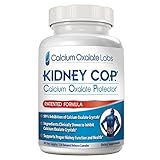
KIDNEY C.O.P. wins the top spot because it is the only pick in this set that names a specific clinical target rather than a generic bone-health claim. The listing describes a 120-capsule bottle at 5.3 oz with a delayed-release capsule intended, the manufacturer says, to release in the intestines rather than the stomach. The brand claims five U.S. patents for the formulation and a 99% reduction figure in the rate of calcium oxalate stone growth. Those are the brand's numbers, not independent measurements, and you should read them as marketing until your urologist tells you otherwise.
Within this set, three things separate it. It carries the most detailed spec sheet of the two mineral supplements. It has the lowest sales-rank number of any pick here, meaning it moves faster on Amazon than the rest. And it is the most expensive pick in the roundup, sitting at the top of the premium price band. That premium buys specificity, not general daily nutrition.
Pros:
- 120 capsules per bottle, largest count of the supplements here
- Delayed-release capsule claim, unique in this set
- Five U.S. patents claimed by the manufacturer
- Fastest-moving of the seven picks on Amazon
- Targeted at a specific clinical problem, not blanket dosing
Cons:
- Highest price position in the set
- Not a general-purpose daily calcium tablet
- Efficacy figures are manufacturer-supplied, not independent
- Only two sellers list it
2. Barefoot Coral Calcium Complete — Best lightweight
A 90-capsule bottle built around 1,500 mg of coral calcium and a 2:1 calcium-to-magnesium ratio, the lightest supplement bottle in the set at 3.21 oz.

Best for: buyers who want calcium paired with magnesium and vitamin D3. Skip it if: you avoid marine-sourced minerals or want a chewable format.
Barefoot Coral Calcium Complete is the more conventional supplement of the two mineral picks. The listing describes 1,500 mg of marine-grade coral calcium sourced from Okinawa, Japan, delivered as 90 capsules per bottle at 3.21 oz. The brand claims a biologically balanced 2:1 ratio of calcium to magnesium and includes vitamin D3 alongside A, C, E, B6 and B12. Coral calcium, the listing adds, is positioned as a natural alkalizer supporting pH balance. Those are the manufacturer's framings.
Compared with KIDNEY C.O.P., this bottle covers broader ground. Rather than one clinical target, it is a general calcium-plus-cofactors formulation. Compared with the Windmill tablets, it goes further on ingredient depth but comes in a smaller count and at a higher price. The trade-off is source and format: coral-sourced capsules versus a plain calcium-magnesium tablet.
Two sellers stock it, so availability is thin. The 90-count means a monthly refill cadence rather than every second month.
Pros:
- 1,500 mg coral calcium per serving, per the listing
- Includes vitamin D3, B6, B12 and other cofactors
- 2:1 calcium-to-magnesium ratio claim
- Lightest bottle in the set at 3.21 oz
Cons:
- Marine sourcing not for everyone
- Only 90 capsules, shorter runway than the top pick
- Premium price band without a targeted clinical claim
- Only two sellers list it
3. Windmill Calcium Magnesium Tablets — Best budget pick
A plain 60-tablet calcium-magnesium supplement, the cheapest of the seven picks and the simplest formulation on offer.

Best for: shoppers who want a no-frills calcium-magnesium tablet for daily bone support. Skip it if: you need a larger monthly supply in one bottle.
Windmill Calcium Magnesium is the entry-level supplement in this set and the cheapest pick overall. The listing describes 60 tablets in a bottle measuring 2 x 4 x 2 in at 5.6 oz, filed under the Magnesium sub-category rather than Calcium because it is a combination tablet. The manufacturer's claims are modest: support for the skeletal system, muscle contraction and nerve function, and a role in bone mineralization. No proprietary blend, no patented capsule.
What earns its spot is what the listing rules out. Windmill states no sugar, starch, yeast, corn, milk, soy, artificial colours, flavours or preservatives. In a set where the other supplements lean on proprietary language, this one leans on a short ingredient story instead.
The trade-offs are real. It sells slowly compared with the top two supplements, suggesting the market is smaller. Only one seller lists it. And 60 tablets is a short runway if you dose daily; a two-month bottle at a similar count would be more common at this price position. As a plain daily bone-support tablet, though, it is the least complicated pick here.
Pros:
- Cheapest of the seven picks
- No sugar, starch, yeast, corn, milk or soy per the listing
- Simple two-mineral formulation
- Compact bottle, 2 x 4 x 2 in
Cons:
- Only 60 tablets per bottle
- Only one seller listed
- Slowest-moving of the three supplements here
- Filed under Magnesium, not Calcium
4. The Calcium Factor — Most versatile
A general-audience book on calcium and health, the broadest of the four titles in this roundup.

Best for: readers who want a wide primer on calcium's role in health. Skip it if: you want current, peer-reviewed clinical guidance.
The Calcium Factor is the first of four books Amazon returned for this keyword. The listing gives you the physical shape and little else: a 0.7 lb paperback measuring 8.25 x 5.25 x 0.5 in. There is no publication date in the data supplied, and no chapter breakdown or author bio to lean on. That matters: without a release date, you cannot tell how current the science is.
Within this set of four books, it earns "most versatile" for its broad framing. The other three narrow in on vitamin K2, an opinionated counter-argument, and osteoporosis drugs. This one, judging by its category placement in Nutrition rather than a disease sub-category, is the wide-angle option.
It is the most expensive book of the four and sits in the premium price band alongside the two branded supplements. If you are buying it as a companion to a supplement rather than a replacement, that price position is easier to justify. Read it as background, not as buying advice.
Pros:
- Broadest framing of the four books in the set
- Filed under Nutrition, not a specific disease
- Two sellers stock it, better availability than most books here
Cons:
- No publication date in the listing
- Premium price band for a paperback
- Not a substitute for current clinical guidance
5. Vitamin K2 And The Calcium Paradox — Best upgrade
A 2013 book arguing that vitamin K2 is the missing piece in the calcium conversation, and the most specific title of the four.
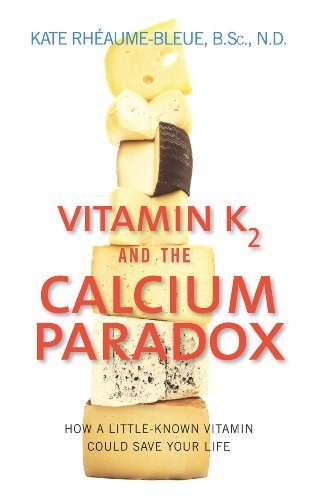
Best for: readers curious how vitamin K2 changes the calcium picture. Skip it if: you want a pill, not a paperback.
If you are the kind of buyer who researches before swallowing, this is the most useful of the four books. The listing shows a 2013 release date, which is the only real data point in the file, but the title itself signals the argument: vitamin K2 is positioned as the vitamin that decides where calcium ends up in the body. That framing has become mainstream enough in supplement marketing that reading the original case is worthwhile.
Among the four books here, this one sits in the entry price band, which is unusual for a specialised health title. That makes it the easiest to add to a supplement order as a background read.
Two caveats belong on the label. First, the 2013 date means over a decade has passed since publication, and nutritional science moves. Second, the listing offers no author biography, no chapter list and no page count in the data supplied. You are buying on the strength of the title and the topic, not on verified detail. Pair it with a current conversation with your doctor.
Pros:
- Focused, specific angle within the calcium debate
- Entry-tier price band, cheapest of the branded picks
- The clearest thesis of the four books
Cons:
- 2013 release date, over a decade old
- Only one seller listed
- Minimal specification data in the listing
6. The Calcium Lie II — Best minimal setup
A 2019 book making an opinionated case against blanket calcium supplementation, the most recent title in the set.

Best for: readers who want a short, contrarian take before buying any calcium. Skip it if: you prefer mainstream clinical consensus.
The Calcium Lie II is the newest of the four books in this roundup at a 2019 release date, which matters more than any other detail. In a field where recommendations shift every few years, six years is closer to current than the other three titles. The listing tells you nothing else about content, length or author credentials, so what you are buying is a viewpoint from a specific publication year.
The title telegraphs the position: an argument that the standard advice on calcium supplementation is wrong. That is a claim, not a fact, and reasonable clinicians disagree with each other about it. If you find contrarian medical writing useful for pressure-testing a purchase before you make it, this pick earns its place. If you want an evenhanded literature review, this is not that book.
Filed under Musculoskeletal Diseases rather than Nutrition, it slots closer to a bone-health argument than a general supplement primer. It is second-cheapest of the seven picks, so the cost of curiosity is low. Only one seller lists it, which is the pattern for these older single-title books.
Pros:
- Most recent book in the set, 2019 release
- Second-cheapest pick overall
- Clear, focused thesis
- Short-format contrarian read
Cons:
- Only one seller listed
- Opinionated framing, not neutral review
- No page count or author detail in the listing
- Slowest-moving of the four books
7. Lies My Doctor Told Me: Osteoporosis — Best for pros
A 2015 book focused on osteoporosis medications, bone density and the role of calcium, aimed at readers already deep in the topic.

Best for: readers researching osteoporosis drugs alongside calcium and bone density. Skip it if: you have no interest in prescription bone medications.
Of the four books here, this one has the narrowest reader. The listing shows a 2015 release date and a category placement under Osteoporosis rather than general nutrition. The title makes the framing explicit: the book positions itself against standard bone-drug prescribing and folds calcium into a broader argument about heart, bone and life. That is a big claim for a paperback and you should treat it accordingly.
Within this set, it is the mid-priced book, sitting between the two entry-band titles and the premium Calcium Factor. Two sellers list it, which is better availability than most of the books here. Its sales rank is the second-slowest in the roundup, so it is not a mainstream best-seller.
The reason it lands last is not quality; it is scope. If you are simply choosing between three supplement bottles, none of what this book covers changes your decision. If you or a family member is being offered bisphosphonates or similar bone medications, the book's angle at least gives you questions to ask. Buy it as a research aid, not a supplement substitute.
Pros:
- Focused on osteoporosis and bone density
- Two sellers stock it
- Mid-tier price, cheaper than the top book pick
- Sits in a specific disease category, not general nutrition
Cons:
- 2015 release date, ten years old
- Narrow reader profile
- Second-slowest seller in the set
- Not a substitute for medical advice
What actually decides a calcium supplement?
Most guides to the best calcium suppliment lead with elemental calcium per serving. That is a useful number, but it is not the deciding one. What actually decides the pick is what you are trying to do with it. A person managing calcium oxalate stones does not want the same product as a post-menopausal reader worried about bone density, and neither wants what a teenager might take for growth.
Three questions decide it, in this order:
- What is the specific health goal? Stone prevention, bone density, general daily insurance, or something else. KIDNEY C.O.P. names the first goal explicitly. The others do not.
- What form and cofactors matter? Some readers want calcium paired with magnesium, some want vitamin D3 alongside, some want K2. Barefoot Coral Calcium Complete stacks D3 and B vitamins in one bottle. Windmill keeps it to the two minerals.
- What is the source and format? Marine-sourced coral, plain tablets, delayed-release capsules. The listings tell you this; the sales rank does not.
If you cannot answer question one, no product on Amazon can answer it for you. That is the honest reason four books share the search page with the pills.
How do the two supplements compare head-to-head?
The choice between KIDNEY C.O.P. and Barefoot Coral Calcium Complete comes down to what problem you are actually solving.
KIDNEY C.O.P. is a 120-capsule bottle with a delayed-release capsule and a specific target: calcium oxalate stone support. The manufacturer claims five U.S. patents and a 99% reduction figure in the rate of stone growth. Those claims are the brand's own and not independently verified in the data supplied.
Barefoot Coral Calcium Complete is a 90-capsule bottle at 3.21 oz with a broader positioning: 1,500 mg of coral calcium, a 2:1 calcium-to-magnesium ratio claim, and vitamin D3 plus A, C, E, B6 and B12. Its framing is general bone and pH support, not a single clinical target.
If your reason to buy is a history of stones, KIDNEY C.O.P. is the specific pick and the reason it wins overall. If your reason to buy is daily bone insurance with cofactors, Barefoot is the better shape. If you cannot decide between the two, that usually means neither is the right answer yet, and the Windmill tablet is the low-cost placeholder while you talk to a professional.
What the listings do not tell you
Every Amazon supplement listing carries less information than a nutrition label would. Read the product pages before you buy and look for:
- Elemental calcium per serving, in milligrams. The word "calcium" on a label can refer to the compound weight, which is larger than the calcium your body actually receives.
- The specific calcium salt used: citrate, carbonate, coral, hydroxyapatite. Each behaves differently on an empty stomach, with food, and alongside acid-reducing medication.
- Serving size versus capsule count. A 120-capsule bottle at four capsules per serving lasts 30 days, not 120.
- Third-party testing marks. USP, NSF or ConsumerLab notes are usually shown as icons on the label rather than in the title.
- Interactions. Calcium supplements can affect the absorption of thyroid medication, certain antibiotics and iron. None of the listings in this set flag that.
None of these details appear reliably in the product data I worked from. That is not a flaw in the products; it is a flaw in what Amazon promises up front. Treat the listing as an advertisement, the label as evidence, and your pharmacist as the referee.
The verdict
The best calcium suppliment for most people looking at this specific Amazon shortlist is KIDNEY C.O.P. Calcium Oxalate Kidney Stone Support, but only for the specific case its listing describes: adults with a history of calcium oxalate stones who want a targeted supplement rather than a general daily tablet. The 120-capsule bottle, the delayed-release capsule claim and the manufacturer's five U.S. patents make it the most specific product in the set. It is also the most expensive.
If your reason to take calcium is broader daily support with cofactors, Barefoot Coral Calcium Complete is the better shape. Ninety capsules, a stated 2:1 calcium-to-magnesium ratio, and vitamin D3 alongside give it a more general use case than the KIDNEY C.O.P. bottle.
If your reason is simply a plain calcium-magnesium tablet for daily bone support and you do not want to overthink it, Windmill Calcium Magnesium Tablets are the cheapest of the seven and the least complicated. The trade-off is a small 60-count bottle and only one seller. The four books in the set are research aids, not replacements. Read one before you buy a bottle if you are unsure why you are buying.
FAQ
Is calcium supplementation worth it for most adults?
Calcium supplementation is worth it only when a specific gap exists in the diet or when a doctor names a clinical reason, and this best calcium suppliment set reflects that. KIDNEY C.O.P. targets stone risk. Barefoot Coral Calcium Complete targets general bone and pH support. Windmill offers a plain daily tablet. If you already eat well and have no diagnosed shortfall, no product here promises to add value on its own.
Which is better for daily use, KIDNEY C.O.P. or Barefoot Coral Calcium Complete?
Which is better depends on the goal. KIDNEY C.O.P. is a 120-capsule bottle aimed specifically at calcium oxalate stone support, with a delayed-release capsule claim from the manufacturer. Barefoot Coral Calcium Complete is a 90-capsule bottle offering 1,500 mg of coral calcium, vitamin D3 and a 2:1 calcium-to-magnesium ratio. For daily general use, Barefoot is the broader tool. For stone risk, KIDNEY C.O.P. is the specific one.
Why are books showing up in a supplement search?
Books showing up in a supplement search reflects how Amazon interprets health keywords. Four of the seven results here are titles about calcium, vitamin K2 and osteoporosis, filed under Nutrition, Musculoskeletal Diseases or Osteoporosis rather than Minerals. The algorithm treats reader intent broadly. If you searched for a bottle, ignore the books. If you searched for understanding, the books may be more useful than the pills.
Can I take the Windmill tablets alongside vitamin D3?
Can you take the Windmill tablets alongside a separate vitamin D3, in principle yes. The Windmill listing describes a plain calcium-magnesium tablet with no added D3. Barefoot Coral Calcium Complete already includes D3, so stacking a separate D3 with it risks doubling up. Check total daily D3 intake against your doctor's recommendation and read every label carefully. This guide cannot verify dosing for your situation.
What is the biggest mistake buyers make with calcium?
The biggest mistake buyers make with calcium is choosing dose first and reason last. Every pick in this best calcium suppliment set answers a different question, from stone prevention to general bone support to background reading. Buying the cheapest tablet without knowing why you are taking it wastes money at best and interferes with other medication at worst. Decide the reason, then decide the product.
The realistic next step is a five-minute audit before you click Check Price. Write down the reason you are considering a calcium supplement in one sentence. If the reason is stone risk, KIDNEY C.O.P. is built for that specific case and earns the top spot. If the reason is general bone support with cofactors, Barefoot Coral Calcium Complete gives you calcium, magnesium and D3 in one bottle. If the reason is "my doctor mentioned it and I want something inexpensive to start," Windmill is the least complicated tablet in the set. If you cannot write the sentence yet, buy the newest of the four books first. A ten-dollar paperback beats a wrong bottle every time.